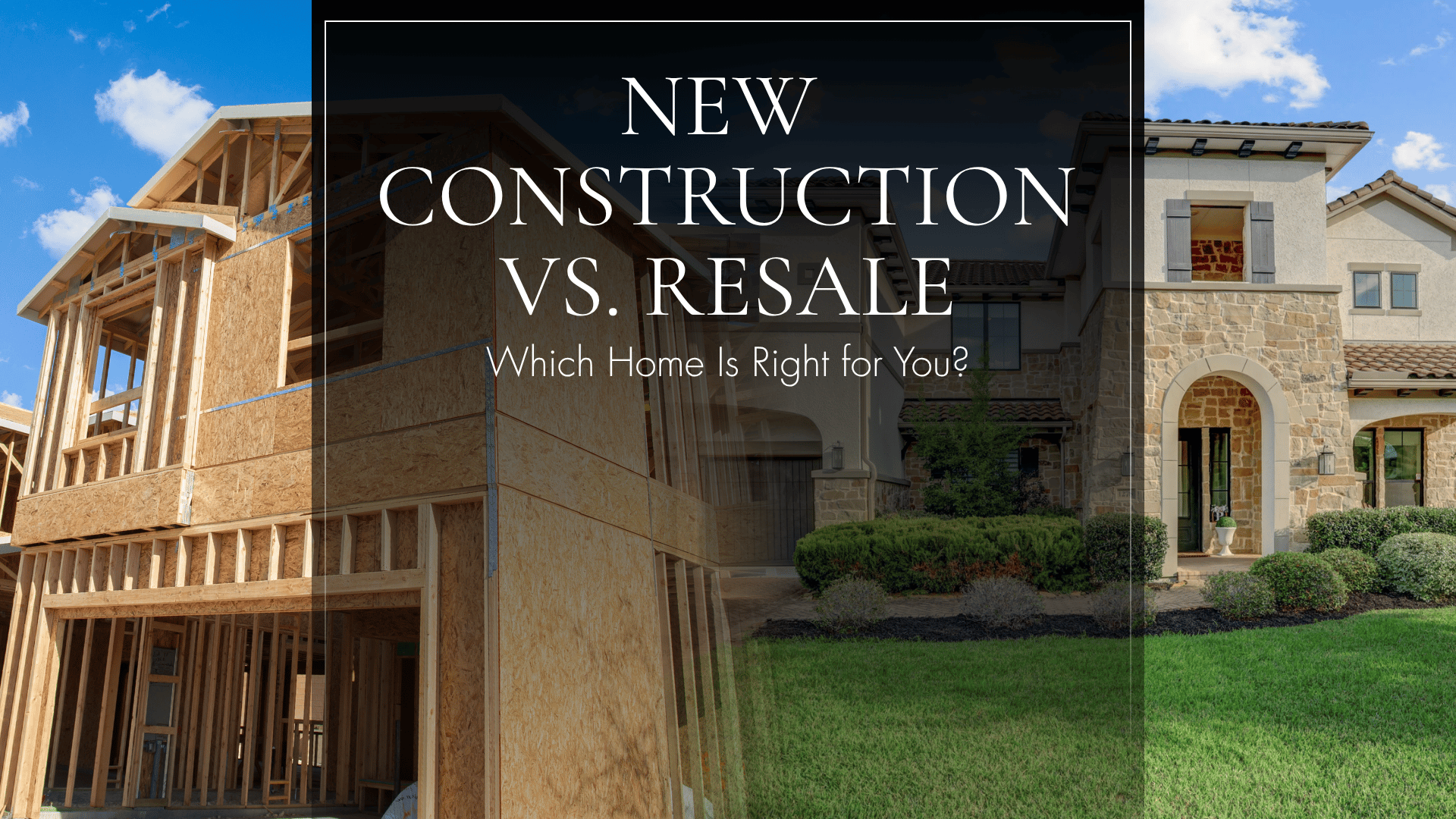
One of the first decisions many homebuyers face is whether to purchase a brand-new construction home or an existing resale property.
There is no universal “better” choice. Both can be great options depending on your budget, timeline, lifestyle, preferred location, and how much flexibility you want throughout the buying process.
The key is understanding what comes with each option before you decide.
Why Buyers Consider New Construction
There is something appealing about being the first person to live in a home. New construction often gives buyers access to modern layouts, updated finishes, newer systems, and energy-efficient features.
Depending on the builder and stage of construction, you may also have the opportunity to select certain finishes, flooring, countertops, fixtures, or other design features.
Another potential advantage is builder incentives. Builders may occasionally offer financing incentives, closing-cost assistance, upgrades, or other promotions to help buyers purchase a home.
However, it is important to look beyond the incentive itself.
A lower interest rate or closing-cost credit can sound attractive, but buyers should still evaluate the total purchase price, monthly payment, taxes, homeowners association fees, insurance, upgrades, and long-term costs.
New Construction May Be a Good Fit If You:
Prefer modern finishes and updated floor plans
Want newer systems, appliances, and major components
Like the idea of having builder warranties
Are comfortable waiting for construction to be completed
Want the possibility of selecting finishes or upgrades
Are considering communities with builder incentives
Things to Consider With New Construction
New construction is not automatically a maintenance-free or stress-free experience.
Construction timelines can change. Weather, labor availability, materials, inspections, and other factors can affect the completion date.
That means buyers who are currently renting may need to consider whether their lease provides enough flexibility if the home is delayed.
You should also understand what is actually included in the base price.
The model home may showcase upgraded flooring, cabinets, lighting, appliances, landscaping, window treatments, or other features that are not included in the advertised starting price.
Before signing a contract, ask what comes standard, what is considered an upgrade, and how those selections affect your final purchase price.
And yes, you should still have independent inspections performed on a new construction home. Brand-new does not necessarily mean perfect.
Why Buyers Consider Resale Homes
Resale homes can offer advantages that new construction may not.
One of the biggest is location.
Established communities may place you closer to work, schools, shopping, restaurants, parks, mature landscaping, or other amenities that are important to your lifestyle.
With a resale property, you can also see exactly what you are purchasing.
The home already exists. The backyard is there. The neighborhood is established. You can walk through the space, understand the layout, see the lot, and get a better feel for how the home lives before making an offer.
Depending on the property and market conditions, resale homes may also give buyers more opportunities to negotiate.
Negotiations can potentially include the sales price, closing-cost contributions, repairs, rate-buydown assistance, appliances, or other terms.
Every transaction is different, but resale purchases often provide more areas for negotiation than buyers initially realize.
A Resale Home May Be a Good Fit If You:
Want to move sooner
Prefer an established neighborhood
Want mature trees or landscaping
Need to be in a very specific location
Want to see the exact home before purchasing
Are comfortable making updates over time
Want the opportunity to negotiate directly with a seller
Things to Consider With Resale Homes
An existing home may come with older systems or features that eventually need to be repaired or replaced.
That does not necessarily make the home a bad investment, but buyers need to understand the condition of the property before moving forward.
A thorough inspection can help identify concerns involving areas such as the roof, HVAC system, plumbing, electrical systems, foundation, appliances, moisture, or other components.
From there, you can determine whether the condition of the home fits your budget and comfort level.
Some buyers would rather purchase a resale home in their ideal location and update it gradually. Others would rather pay more upfront for a home that requires very little work.
Both approaches can make sense.
Don't Compare Price Alone
One of the biggest mistakes buyers can make is comparing only the listing prices.
For example, imagine a resale home is priced lower than a new construction property.
At first glance, the resale home may appear to be the better financial option.
But what if the new construction home includes a financing incentive that significantly changes the monthly payment?
On the other hand, what if the new construction home requires tens of thousands of dollars in upgrades to get the finishes you actually want?
The better comparison is the complete financial picture.
Consider:
Purchase price
Interest rate and loan terms
Property taxes
Homeowners insurance
HOA fees
Closing costs
Builder incentives
Seller concessions
Expected repairs
Upgrades
Landscaping
Appliances
Window coverings
Moving timeline
Long-term maintenance
That is where having someone help you compare the numbers can make a significant difference.
What About Property Taxes?
Taxes are another important part of the conversation, especially in new construction communities.
Buyers should understand how the property is currently being assessed and what the taxes may look like once the home is fully completed and assessed at its improved value.
Never base your long-term budget solely on a temporary tax amount shown during construction.
Your real estate professional and lender can help you estimate a more realistic future monthly payment.
Do You Need a Real Estate Agent When Buying New Construction?
Yes, and buyers should strongly consider having their own representation before visiting or registering with a builder.
The builder's sales representative works for the builder.
Your real estate agent works for you.
Your agent can help you evaluate different builders and communities, compare pricing, review available inventory, understand incentives, coordinate inspections, monitor construction milestones, communicate with the builder, and help you understand the overall transaction.
Having representation can be especially valuable because builder contracts and timelines can look very different from a traditional resale transaction.
So, Which Should You Choose?
The right answer depends on what matters most to you.
If you want something new, prefer modern finishes, and are comfortable with a construction timeline, new construction may deserve serious consideration.
If location, established neighborhoods, move-in timing, or negotiation flexibility are higher priorities, resale may be the better fit for your search.
Some buyers begin their search convinced they want new construction and ultimately fall in love with a resale home.
Others assume resale will be the better value and discover that builder incentives make new construction surprisingly competitive.
That is why I encourage buyers to explore both before making a decision.
Compare the Options Before You Commit
Buying a home should not be about choosing the option everyone else says is best.
It should be about understanding the numbers, asking the right questions, and choosing the home that makes the most sense for your life.
My approach with buyers is simple: I do not pressure, I educate.
Whether you are considering a new construction community, an existing home, or both, having someone help you compare the real costs, incentives, condition, location, and long-term value can make the decision much clearer.
If you are thinking about buying in Houston or the surrounding areas and aren't sure where to start, let's talk through your options and build a strategy around what matters most to you.
Check out this article next